Cardiovascular Disease Prevention
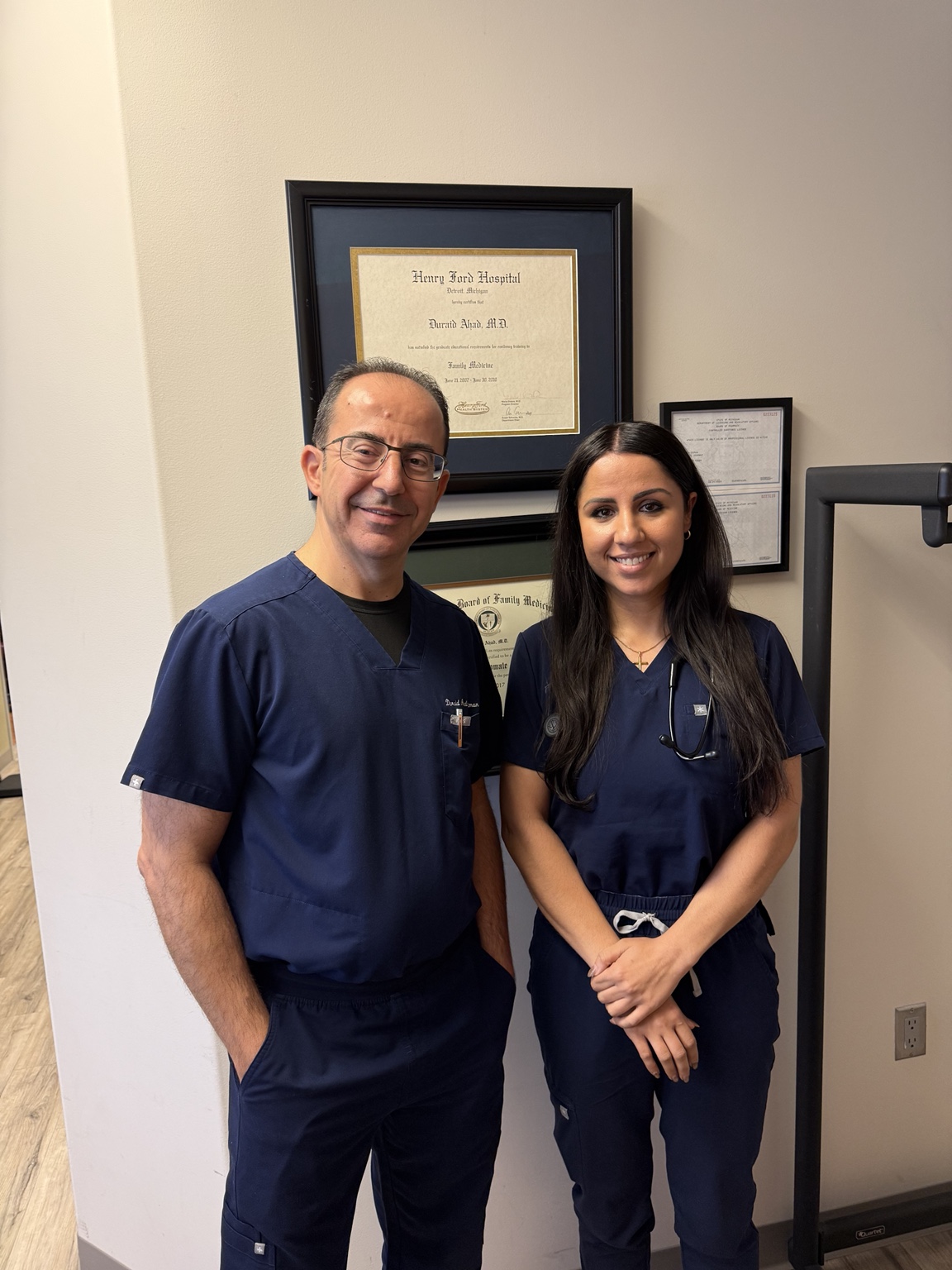
Duraid Ahad-Daman, MD
Family Medicine located in Troy, MI
Cardiovascular disease prevention and risk reduction at Ahad MD PC in Troy, Michigan. Dr. Duraid Ahad-Daman helps identify risk early and develop a personalized plan for heart and vascular health.
Find risk early. Build a plan. Follow through.
A proactive approach at Ahad MD PC
Dr. Duraid Ahad-Daman emphasizes early identification and active management of cardiovascular risk. Your visit brings together blood pressure, cholesterol, blood sugar, smoking history, family history, and lifestyle to develop a prevention plan tailored to you.
We discuss testing that may clarify your risk, set treatment goals, and plan follow-up. The aim is to act on meaningful findings before a heart attack or stroke occurs.
Start with the fundamentals
Bring your medication list, recent lab results, home blood pressure readings, and any family history of early heart disease or stroke. We review these alongside your health history and examination. If you already have cardiovascular disease, your plan focuses on preventing further events and may involve your cardiologist.
What does the U.S. Preventive Services Task Force recommend?
USPSTF recommendations generally address prevention in people without related symptoms. Important recommendations include:
- Blood pressure: Screen adults age 18 and older. Confirm a new diagnosis with home or ambulatory measurements before starting treatment when clinically appropriate.
- Blood sugar: Screen adults ages 35–70 who have overweight or obesity for prediabetes and type 2 diabetes. Other risk factors may justify earlier testing. People with prediabetes should be offered or referred to effective preventive interventions.
- Statins: For adults ages 40–75 without known cardiovascular disease, with at least one risk factor and an estimated 10-year cardiovascular risk of 10% or greater, the USPSTF recommends a statin. At 7.5% to below 10%, treatment is offered selectively. Evidence is insufficient for starting a statin for primary prevention at age 76 or older. Very high LDL or familial hypercholesterolemia requires a separate treatment pathway.
- Aspirin: Starting aspirin for a first heart attack or stroke is an individual decision for selected adults ages 40–59 with at least 10% estimated 10-year risk and low bleeding risk. USPSTF recommends against starting it for primary prevention at age 60 or older. Do not start or stop prescribed aspirin without discussing why you take it.
Testing options to discuss at your visit
Tests are selected according to risk, symptoms, and whether results could change treatment. Ask which can be performed through the practice and which require an outside laboratory, imaging center, or specialist.
| Test or assessment | How it may help |
|---|---|
| Office and home blood pressure | Identify high blood pressure and track control over time. Ambulatory monitoring may help clarify uncertain patterns. |
| Lipid panel and blood sugar testing | Assess cholesterol and diabetes-related risk. A1c or fasting glucose may be used when screening is indicated. |
| Lipoprotein(a), or Lp(a) | Identifies a largely inherited risk factor that is not reported in a standard lipid panel. The 2026 ACC/AHA guideline recommends measurement at least once in adulthood. |
| Apolipoprotein B (ApoB) | May clarify risk in selected patients, including those with diabetes or high triglycerides. |
| Coronary artery calcium (CAC) score | A CT scan that detects calcified coronary plaque. ACC/AHA guidance supports selective use when the decision about preventive medication remains uncertain. It involves radiation and does not rule out every form of coronary disease. |
| Coronary CT angiography (coronary CTA) | Uses CT imaging and intravenous contrast to evaluate coronary plaque and narrowing. It may be appropriate for selected patients based on symptoms and clinical assessment. Unlike calcium scoring, it uses contrast; kidney function, contrast-reaction history, and radiation exposure are considered. Testing is arranged at an appropriate imaging facility when indicated. |
| ECG, echocardiogram, or stress testing | May answer specific questions about rhythm, heart structure, or symptoms. These are not a routine screening package for every patient. |
| Carotid ultrasound | Uses ultrasound to assess blood flow and narrowing in the neck arteries supplying the brain. It may be used for a specific diagnostic indication or follow-up of known disease. USPSTF recommends against routine screening for carotid artery narrowing in adults without symptoms. |
| Vascular testing | Tests such as an ankle-brachial index or vascular ultrasound may be considered for symptoms or examination findings suggesting vascular disease. |
Convenient office-based testing, with attention to cost
Some cardiovascular tests can be performed in our office and may cost less than the same testing in a hospital setting. Ask our team which recommended tests are available in-office and about an estimate before scheduling.
Your out-of-pocket cost depends on the test, insurance coverage, deductible, and testing location. Advanced imaging, including coronary CTA, is arranged through an appropriate imaging facility when needed.
How we apply the guidance
USPSTF finds insufficient evidence to recommend routinely adding CAC, ankle-brachial index, or high-sensitivity CRP to traditional risk assessment in people without symptoms. It recommends against resting or exercise ECG screening in low-risk adults without symptoms; evidence is insufficient in higher-risk asymptomatic adults. It also recommends against screening the general adult population for asymptomatic carotid artery narrowing.
The 2026 ACC/AHA cholesterol guideline offers additional guidance on individualized risk assessment, Lp(a), ApoB, and selective CAC testing. These are separate recommendations, not USPSTF endorsements. We explain which guidance applies and how a result could affect your care.
Turn results into action
Your plan may include treatment for high blood pressure, high cholesterol, or diabetes; help with tobacco cessation; and realistic goals for food choices, physical activity, sleep, and weight. Follow-up helps assess progress and adjust treatment.
Identifying risk is the first step. Consistent care and appropriate treatment help reduce that risk over time.
Symptoms need prompt assessment
Call 911 for possible heart attack or stroke symptoms, including chest pressure, severe shortness of breath, sudden weakness on one side, or trouble speaking. Do not wait for a preventive visit or a screening test.
Schedule a cardiovascular disease prevention visit
Discuss your personal risk, testing options, and a practical plan with Dr. Ahad-Daman at our Troy practice.
Guidelines and further reading
- ACR/RSNA RadiologyInfo: Coronary CTA
- USPSTF: Blood pressure screening
- USPSTF: Prediabetes and diabetes screening
- USPSTF: Statins for primary prevention
- USPSTF: Aspirin for primary prevention
- USPSTF: Additional cardiovascular risk tests
- USPSTF: ECG screening
- USPSTF: Carotid artery screening
- 2026 ACC/AHA cholesterol guideline
Patient information updated September 22, 2026. Recommendations and testing are individualized.
Insurance Accepted
Dr. Ahad-Daman accepts most major insurance providers. Please contact your insurance provider directly for any coverage-related questions.


Words from our patients
-

"If your looking for a doctor who cares about his patients, Dr. Ahad is the doctor for you. Office staff is great and are pleasure to deal with."
-
Dr. Ahad takes his time, answering all the questions, with impressive patience and high quality healthcare, addressing all the issues right away, highly recommend him..."

